
|
|
|
top |
 |
 |
 |
  |
 |
  |
  |
 |
 |
|
DOGS MUSHERS BEGINNERS BOOKSTORE FANS FEATURES FIND IT LINKS RESOURCES RACING TRAINING FUN SDC |
|
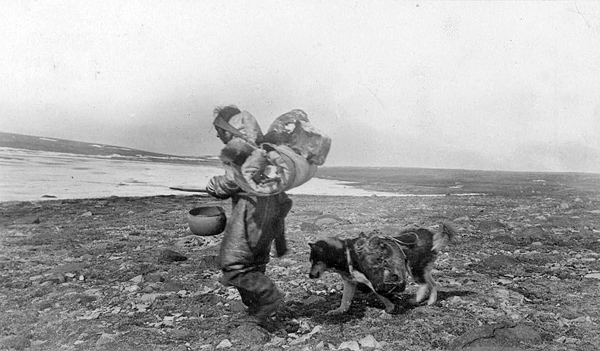
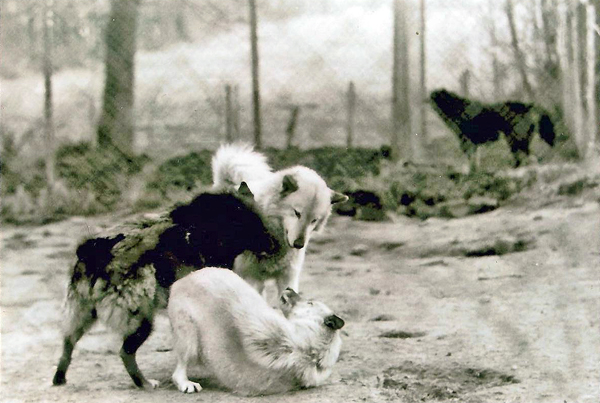
The Inuit Dog by Sue Hamilton (January 2013) The Inuit Dog has existed for about four thousand years and is properly referred to as a landrace or an aboriginal dog, but not a breed. The term aboriginal dog is defined as having “evolved by natural selection under conditions of free life and close interactions with people” (Vladimir Beregovoy). Archaeological evidence has shown that the Inuit Dog was not used to pull sleds until about 800 AD. Prior to (as well as continuing after) that time it was used as a hunting partner to find terrestrial (musk ox, caribou) and marine (seal, polar bear) mammals and in some instances “detain” the four-legged quarry until they could be killed for food, fuel, clothing and other materials necessary for existence. The Inuit Dog was also used as a pack dog in the summer and camp guard dog, alerting Inuit to the approach of polar bears. To fully appreciate the Inuit Dog one must understand of the history of Inuit themselves, for the lives of The People and their dogs were so dependent upon one another. In the year 2000, shortly after becoming a Canadian territory, Nunavut declared the Canadian Inuit Dog – Canis familiaris borealis – its official animal, recognizing the landrace’s essential role in human survival. Call them urban myths, legends or even fairy tales, it is absolutely untrue that the Inuit Dog is part wolf. Inuit staking out bitches in estrus to be bred by wolves is also considered unlikely as wolves are well known to kill dogs. Any resemblance between these wild and aboriginal (yet domesticated) canids is the result of certain shared arctic phenotypes.
The Inuit Dog is known by many names. Qimmiq, the Inuktitut word meaning “dog”, comes from a time when there were no non-aboriginal dogs in the North. Qimmiq remains understood to refer to this landrace. This animal is also called the Canadian Inuit Dog or Greenland Inuit Dog, but can be collectively referred to as Inuit Dog or Inuit Sled Dog because it has been shown by archeological/anthropological fieldwork (MacRury, 1991 masters thesis) as well as by DNA analysis (Friis-Andersen, 2005 veterinary masters thesis) to be one landrace. The Canadian Eskimo Dog is generally recognized as the kennel club registered breed maintained as a show dog and “pet”, bred to a written conformation standard, not reproduced based on the challenges of polar climate, lifestyle and nature of its work. However, there are some owners who breed and use these dogs strictly as working animals but who continue to refer to them as Eskimo Dogs because they can be traced back to the Eskimo Dog Recovery Project of the 1970s-1980s (William Carpenter and John McGrath) even though they feel no need to register these descendants of the recovery project dogs with the Canadian Kennel Club (CKC). There is another important distinction. While the existence of Inuit Dogs in the arctic remains in peril due to many factors including human transition from a nomadic to a settled lifestyle, challenges by genetic contamination and lack of veterinary support (especially for routine vaccination against fatal but preventable epidemics of distemper and parvovirus), the numbers of these aboriginal dogs are unrelated to an often cited figure which refers to the remaining CKC registered Canadian Eskimo Dog breed. As Bill Carpenter said in a January 2001 New York Times interview, "The future of this dog is not with southern dog shows, not with pet owners on leashes. The future of this dog lies in its cultural setting. The future of the dog is in the hands of the northerners."
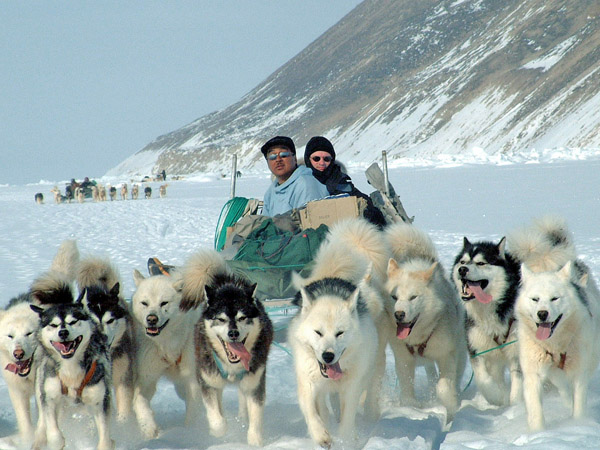
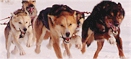
In the past century, the role of the aboriginal Inuit Dog has certainly changed. Perhaps with rare exception Inuit Dogs are no longer used every day to perform the many vital roles of as part of a nomadic life since Inuit are now living in hamlets and no longer dependent on their dogs. Although some Inuit Elders say that today’s dogs are not the ones they remember from their youth, there is no doubt that traditional Inuit Dogs still exist in northern communities, mostly in the Eastern Canadian Arctic and Greenland. There may even be Inuit Dogs in Arctic Russia although this has not been confirmed. Today, in the North, the Inuit Dog is used for tourism, expeditions and hunting for “country food” to supplement an increasingly “southern” human and sled dog food diet. In Canada client sport hunting for polar bears can only be legally done by dog team. In Greenland there are districts that do not permit the use of snow machines. Dog teams are used in tourism, hunting and to haul home enormous catches of fish.
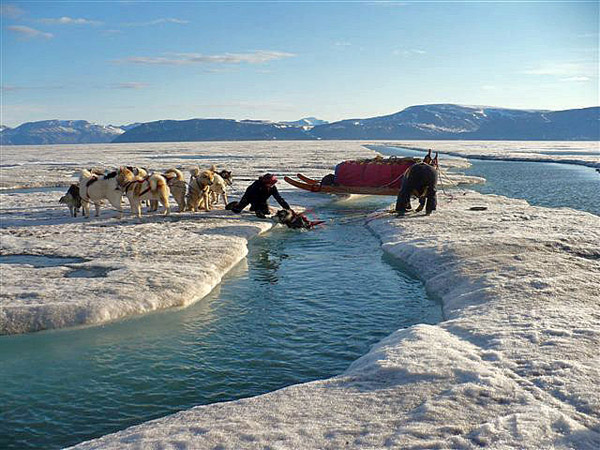
Despite the relatively recent advent of the Nunavut Quest (Nunavut) and Ivakkak (Nunavik), the Inuit Dog should not be considered a racing dog. As sledge dogs, they have been bred for centuries to do hard mile hauling (up to twice their own bodyweight) sometimes on limited rations and often under the most adverse of weather and ice conditions during which when you reach your destination is not nearly as critical as getting there alive!
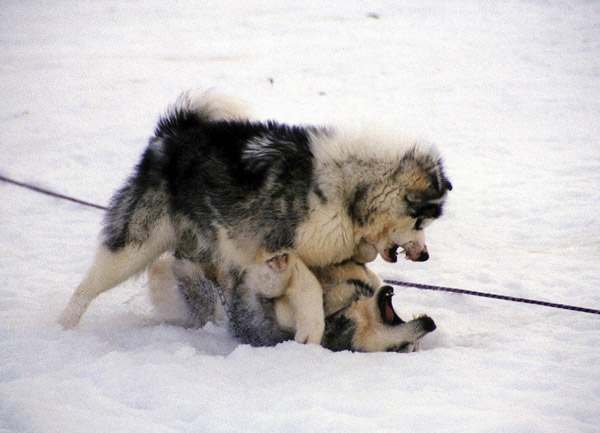
Southern mushers only casually familiar with Inuit Dogs have described them as “furry alligators” and have suggested that what they see as belligerent fighting should be bred out since that “aggressiveness” is no longer needed for holding polar bears or musk ox at bay.
However, the tough and determined Inuit Dog, whether describing microscopic cellular/metabolic traits or visually outward behavior, is the result of millennia of a working life in harsh arctic conditions and is part and parcel of the Inuit Dog profile. It is no wonder that Bill Carpenter has described the Inuit Dog as having “an exaggerated response to all stimuli”.
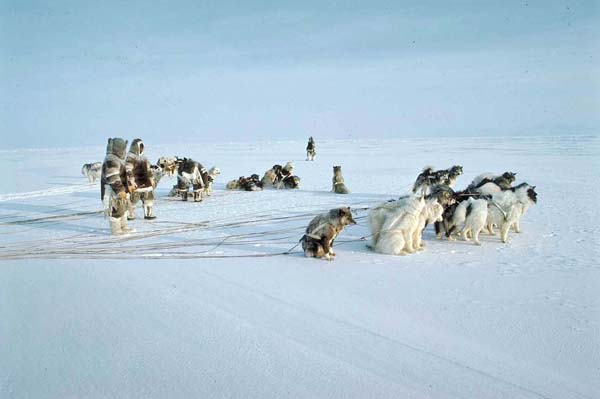
Inuit Dog behavior and social structure is built around the boss dog phenomenon. A team/group/pack of Inuit Dogs has a boss dog, (almost always male and sometimes more than one at a time who work cooperatively) and, eventually as they mature, boss dog wannabes. An omnipotent boss is his owner’s most valuable asset. He rules supremely and a really good boss can do so for many years with a minimum of bloodshed. The boss prevents or stops fights amongst the lower ranking dogs and is the one who usually breeds the bitches. Out on the ice we have witnessed a fan hitch team of 14 males and two females resting quietly on the ice while the boss and the bitch in estrus stand tied! Polar traveller Renee Wissink has described the attitude of these dogs as, “If you can’t eat it or screw it, then piss on it!” When a boss shows signs of aging and weakness, usually he is killed by the young male(s) seeking to replace him.
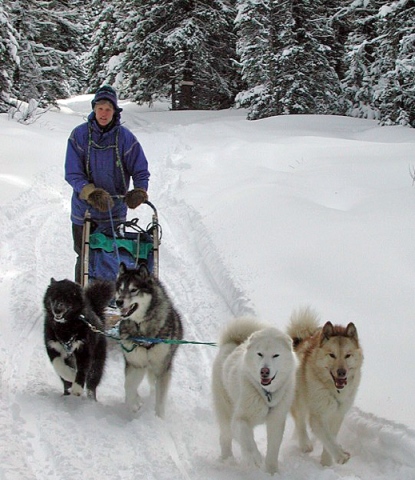
This hierarchy within Inuit Dog society is deeply rooted in its history. While this is usually “worked out” amongst dogs in their native habitat, sometimes dogs kept below the tree line raised differently from those in the North never get to fulfill that aspect of their inherited destiny. Yet the trait remains and therefore fights may result. You can take the Inuit Dog away from the Arctic but you should not expect to extinguish 4000 years of its evolution…nor want to. Neither pets nor housedogs, there is still definitely a place for Inuit Dogs in the south with outfitters and recreational mushers experienced in their management. Only a few of these legendary, powerful and determined dogs are needed to take you where you want to go. But southern mushers must keep in mind that without the challenges of a polar existence it is difficult to maintain the Inuit Dog as a landrace in terms of knowing which specimens should be bred and which should not. Invigorating southern gene pools with proven traditional polar dogs is strongly recommended. Aside from these reproductive decisions, keeping these tough dogs is surely not for the faint of heart or for those whose neighbors might be intolerant of ear-shattering shrill, shrieking, hysterical voices stimulated by feeding, unwanted animal visitors, loading the dog truck, sirens or even a full moon. The decision to own Inuit Dogs should not be made based on the perception of them being a “rare collector’s item” or by convincing oneself and others that it is somehow possible to “save the breed” by means other than respecting and reproducing for the aboriginal qualities and performance of this arctic landrace. Anything short of that will result in the desecration, an irretrievable loss, of the Inuit Dog’s intrinsic attributes and values, similar to the trend which began in the late 1800s Victorian England when so many useful working dogs were, in a very few generations, turned into breeds of functionless fancy.
For a more thorough description of the Inuit Dog, including appearance, health, behavior, its history at both Poles and value to the scientific community; to learn more about related Inuit culture and traditions; and much, much more please visit The Fan Hitch, Website and Journal of the Inuit Sled Dog at thefanhitch.org Sue and her husband, Mark, kept, bred and used Alaskan Malamutes for recreational mushing from 1972 to 1995 (their last Alaskan Malamute died in 2009). They began decades of visits to the North in 1982, traveling across Arctic Canada and (once) to the Disko Bay region of Greenland. They started mushing strictly with Inuit Dogs after returning to Connecticut with their first three brought back from Canada’s North Baffin in 1996. In 1998 they began publishing The Fan Hitch journal.
top of page | home | feedback | search
|
Copyright © 1997-2020, Sled
Dog Central, all rights reserved.
Sled Dog Central is a subsidiary of Vega Discoveries, LLC
No portion of this site may be published, broadcast, rewritten or redistributed
without written permission.
All materials appearing on this site, including the text, site design, logos, graphics,
icons, and images, as well as the selection, assembly and arrangement thereof, are the
sole property of Sled Dog Central.
Email Us