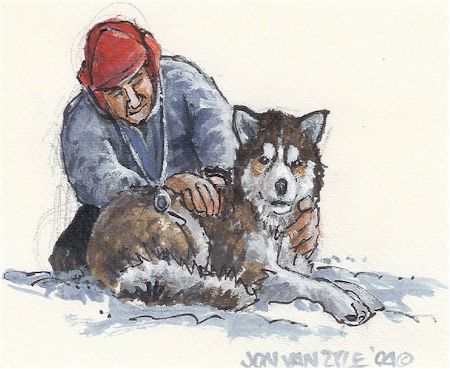
 2004 Iditarod Poster |
 Jon & Jona Van Zyle |
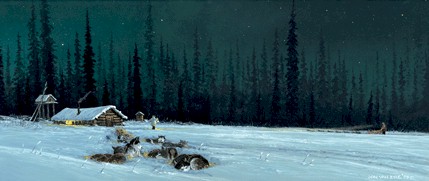
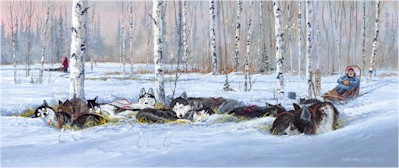 2004 Mush Poster |
2004 Iditarod Poster |
Jon & Jona Van Zyle |
2004 Mush Poster |
3/5/2004 - Vet CheckHarmony Vet Services, Sandy Ferris, DVM Sandy Ferris is Ellie’s main vet and also one of her race sponsors. Sandy works part time for Ravenwood Veterinary Clinic in Eagle River, Alaska and also has her own mobile vet service. Sandy has competed in both sprint and distance racing and still maintains a kennel of Alaskan huskies, so she’s very knowledgeable about sled dogs. I had a chance to chat with Sandy the other day and she’s excited about Ellie’s Iditarod. She’s been very impressed by Ellie’s knowledge of her dogs and her conscientious commitment to their care. She’s found Ellie very levelheaded for her age, and not afraid to call immediately with questions or problems. Ellie’s alertness to potential problems and willingness to act should keep her dogs protected from potential problems on the trail. Sandy thinks Ellie’s youth helps her stay open to new ideas and techniques utilizing massage, shoulder and wrist wraps and foot care. View details on Ellie's team and race background Sandy feels the biggest problems to face Ellie’s team are the virus and bacterial contaminates from other teams along the trail. Ellie’s dogs are all current on their vaccines, are micro chipped and were wormed again a few weeks prior to the race. She’s packed the vitamins and food supplements she’s been using since last autumn along with the National Performance 35/25 dog food she has been using for two seasons now. Ellie also plans to keep her team away from areas where other teams have camped. Ellie’s team will have about 2,000 miles of training and 300 miles of racing before the start. The hard part now is keeping them healthy before the race. Every training run exposes the team to new strains of viruses carried by the variety of new visiting racers using our Chugiak dog trails. Racing season is in high gear and teams from all over the world are now in Alaska to compete. Sandy’s recommendations to Ellie are applicable to all mushers worried about contaminated staging areas. Don’t drop your dogs around your truck; take them from their boxes directly to the waiting gangline. After your run, water them on the gangline before you reach your truck; them put them directly back into their boxes. The point is to avoid having the dogs stand in the same area that has been used frequently. One other option is to park further away from the actual staging area, and then lead your team past the other trucks. It’s more difficult than dropping the dogs at your truck but easier than dealing with kennel cough and debilitating diarrhea especially just before the big race. You can check the Iditarod web site for a complete listing of usable or prohibited medications that mushers can carry on the race. Vet Check Day - Tuesday February 24, 2004-03-01
|
©2004 Jon & Jona Van Zyle
All material in the Iditarod Sketch Pad remain the property of Jon & Jona Van Zyle
and may not be reproduced in any manner.